
11N / 12D
Duration: Delhi - Agra - Jaipur - Udaipur - Jodhpur - Jaisalmer - Bikaner - Mandawa - Delhi
Across northern India, layers of imperial ambition and regional power shaped some of the most remarkable cities in the subcontinent. This Royal Rajasthan with Taj Mahal Tour connects Mughal refinement with Rajput strength, desert citadels with painted merchant mansions, and sacred lakes with golden sand dunes.
Beginning in Delhi and Agra, the journey introduces the architectural precision of the Mughal era before transitioning into Rajasthan’s fortified capitals. Jaipur’s symmetry, Udaipur’s lakeside elegance, Jodhpur’s towering ramparts and Jaisalmer’s desert bastions collectively narrate centuries of dynastic rivalry, trade expansion and artistic patronage.
This itinerary is structured for travelers who seek continuity rather than isolated sightseeing. Each destination builds upon the previous one, creating a complete heritage arc from imperial Delhi to the fresco-covered towns of Shekhawati.
Delhi introduces the political and architectural foundations of North India. Your private guide begins the day at Jama Mosque, where the scale of its courtyard and red sandstone façade reflect Mughal religious design. From its elevated platform, the view stretches across Old Delhi’s dense commercial lanes.
The route continues to Raj Ghat, a restrained memorial set within landscaped gardens. Qutub Minar follows, rising above medieval ruins as an example of early Indo-Islamic engineering. The detailed calligraphy and alternating sandstone bands demonstrate precision craftsmanship.
Humayun’s Tomb presents a refined Mughal garden layout, later influencing the Taj Mahal’s symmetry. Drive past India Gate and the wide ceremonial avenues before returning to your hotel. Overnight stay in Delhi.
After breakfast, depart Delhi and travel toward Agra via the Yamuna Expressway. As the cityscape gradually gives way to cultivated farmlands and rural settlements, the journey traces the historic corridor once used by Mughal emperors between their imperial capitals. The Yamuna River basin has historically supported agriculture and trade, shaping the prosperity of the Mughal Empire. Upon arrival in Agra, check into your hotel and take a short break before beginning afternoon exploration.
The first major site is Agra Fort, a formidable red sandstone citadel built by Emperor Akbar in 1565. Unlike decorative palaces, this fort was both a military stronghold and an imperial residence. Inside its massive walls lie Diwan-i-Am (Hall of Public Audience), Diwan-i-Khas (Hall of Private Audience), Jahangir’s Palace and intricately carved marble pavilions. From the fort’s river-facing balconies, you can glimpse the distant Taj Mahal — a poignant reminder of Emperor Shah Jahan’s final years spent imprisoned here by his son.
Continue to Itmad-ud-Daulah, often described as the transitional monument between earlier red sandstone structures and later white marble masterpieces. Its delicate pietra dura inlay work, lattice screens and Persian-inspired geometry demonstrate evolving Mughal craftsmanship. Conclude the day at Mehtab Bagh, a riverside garden aligned perfectly with the Taj Mahal across the Yamuna. From here, the marble mausoleum appears framed by greenery and flowing water. Overnight stay in Agra.
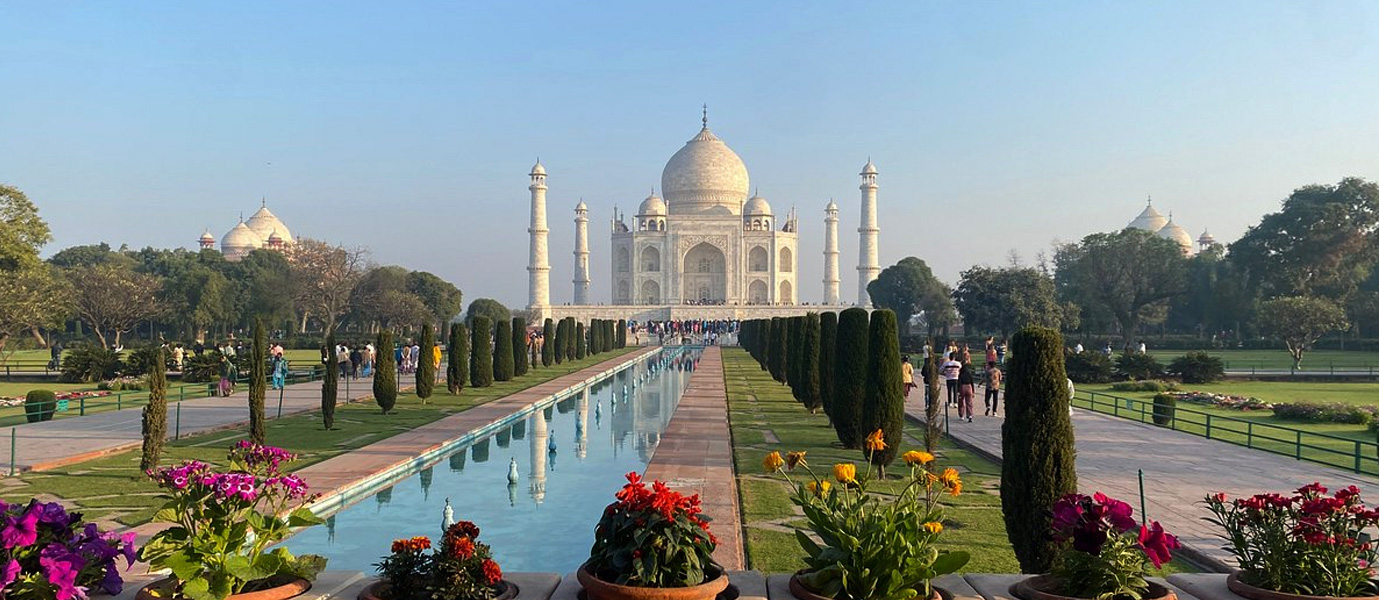
Before sunrise, proceed to the Taj Mahal. As first light touches the marble surface, the monument shifts from soft grey to pale pink and eventually radiant white. Built by Emperor Shah Jahan in memory of Mumtaz Mahal, the Taj represents balance, proportion and refined Mughal aesthetics. Your guide explains the architectural symmetry, calligraphy panels, inlaid semi-precious stones and the precision behind its minaret alignment.
After breakfast, depart Agra for Jaipur. En route, stop at Fatehpur Sikri, the short-lived Mughal capital built by Akbar in the 16th century. The complex features the grand Buland Darwaza, Jama Masjid courtyard and palatial residential quarters constructed entirely from red sandstone. Although abandoned due to water scarcity, Fatehpur Sikri remains an extraordinary example of imperial planning and architectural experimentation blending Persian and Indian elements.
Continue your drive into Rajasthan as the landscape transitions toward semi-arid terrain. Upon arrival in Jaipur, check into your hotel. The Pink City’s uniform terracotta facades and structured urban layout reflect 18th-century town planning principles. Evening at leisure. Overnight stay in Jaipur.
Begin your exploration with Amber Fort, strategically positioned above Maota Lake. The ascent by jeep follows stone pathways once used by royal processions. Within the fort complex, ornate gateways, mirrored Sheesh Mahal halls and painted courtyards reflect Rajput courtly aesthetics. Defensive ramparts contrast with intricately decorated royal apartments, illustrating the balance between warfare and refined living.
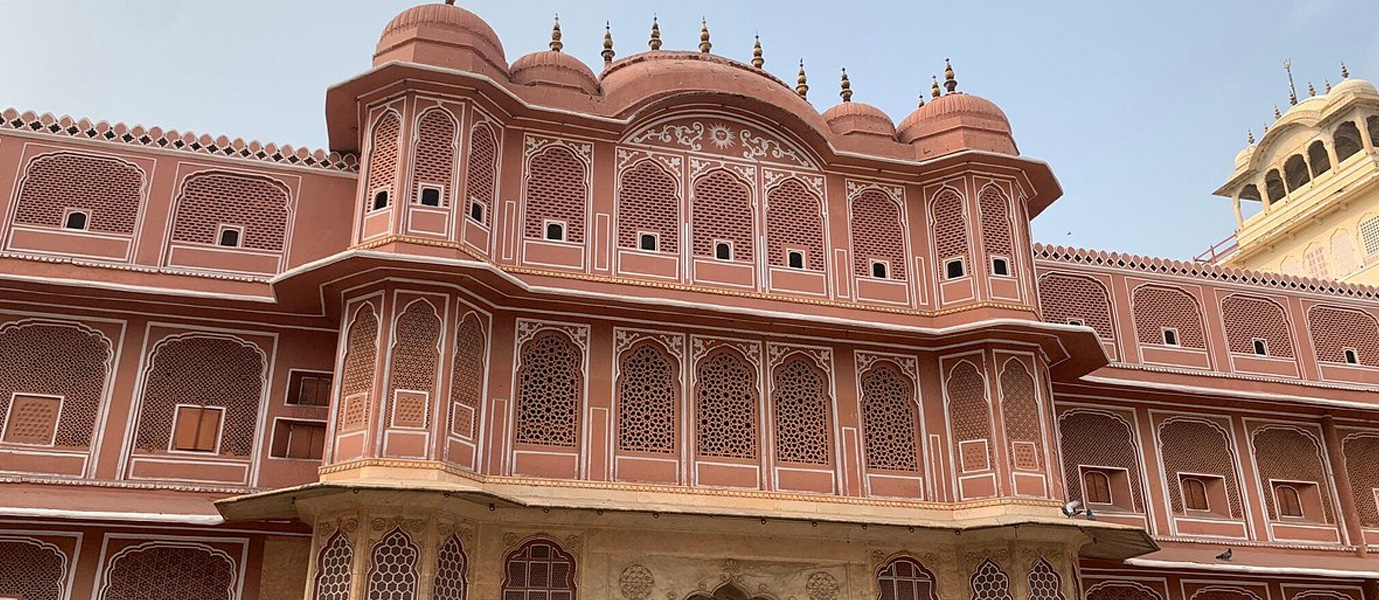
Return to the city to visit the City Palace, the former royal residence of the Kachwaha dynasty. Its courtyards, audience halls and museum galleries display textiles, ceremonial garments, manuscripts and traditional weaponry. Architectural elements show a harmonious blend of Mughal arches and Rajput decorative motifs. The palace complex remains partially inhabited by Jaipur’s former royal family.
Continue to Hawa Mahal, an iconic five-storey façade designed with 953 lattice windows allowing royal women to observe street festivals discreetly. Conclude the day at Jantar Mantar, an astronomical observatory built by Maharaja Sawai Jai Singh II. Massive stone instruments measure celestial positions with remarkable accuracy, demonstrating scientific advancement in 18th-century India. Overnight stay in Jaipur.
After breakfast, depart Jaipur toward Pushkar, a sacred town centered around its holy lake. Pushkar Lake is surrounded by ghats where pilgrims perform rituals and offer prayers. The Brahma Temple, one of the few temples dedicated to Lord Brahma, adds spiritual significance to the town. Narrow streets lined with small shops and temples preserve its devotional atmosphere.
Following your Pushkar visit, continue the journey toward Udaipur. The road gradually enters the Aravalli range, India’s oldest mountain system. The terrain becomes greener, dotted with rocky outcrops and rural settlements. This scenic drive contrasts sharply with the desert landscapes encountered earlier in the tour.
Upon arrival in Udaipur, check into your hotel. Known as the “City of Lakes,” Udaipur introduces a softer architectural style defined by water bodies and white marble palaces. Evening at leisure to relax or enjoy lakeside views. Overnight stay in Udaipur.
Morning begins at Sahelion Ki Bari, a landscaped garden created for royal attendants of the Mewar court. Marble pavilions, lotus pools and decorative fountains create symmetry within a tranquil setting. The garden reflects leisure architecture designed for comfort during Rajasthan’s warmer months.
Continue to the City Palace complex, rising above Lake Pichola. Built over several centuries by successive rulers, the palace integrates balconies, courtyards, mosaic peacock panels and mirrored chambers. The museum houses royal artifacts, miniature paintings and ceremonial objects illustrating Mewar’s dynastic continuity. From the palace terraces, panoramic views of the lake and surrounding hills unfold.
In the evening, enjoy a boat ride on Lake Pichola. Passing Jagmandir Island and the iconic Lake Palace, the water reflects the soft golden hues of sunset against white marble facades. The boat ride offers a calm conclusion to the day’s exploration. Overnight stay in Udaipur.
After breakfast, depart Udaipur and begin your scenic drive through the rugged Aravalli hills. The landscape shifts into granite ridges, narrow valleys and scattered rural settlements. En route, arrive at the Ranakpur Jain Temple complex, one of the most remarkable marble temples in India. Built in the 15th century, the temple is dedicated to Tirthankara Adinath and is renowned for its 1,444 intricately carved pillars — no two pillars share the same design. The temple’s light-filled halls and geometric ceilings reflect extraordinary craftsmanship and spiritual symmetry.
After exploring Ranakpur, continue the journey toward Jodhpur. As you approach the Blue City, the imposing Mehrangarh Fort becomes visible from miles away, rising dramatically above the plains. Upon arrival, begin sightseeing with a guided exploration of Mehrangarh Fort. Its massive gates still bear marks of cannon impacts, while inside, intricately carved balconies, royal palanquins and period weaponry narrate stories of Marwar’s warrior rulers. From the fort’s ramparts, panoramic views stretch across the sea of indigo-painted houses below.
Continue to Jaswant Thada, a serene white marble cenotaph built in memory of Maharaja Jaswant Singh II. Its delicate lattice work and peaceful gardens provide a tranquil contrast to the fort’s defensive architecture. Conclude the day at Umaid Bhawan Palace, an architectural landmark blending Art Deco design with Rajput grandeur, still partly inhabited by the royal family. After sightseeing, transfer to your hotel for overnight stay in Jodhpur.
After breakfast, depart Jodhpur and drive westward across the Thar Desert region. The terrain gradually transforms into expansive arid landscapes dotted with khejri trees, grazing camels and isolated villages built from sandstone. The road journey offers insight into desert life and the trade routes that once connected Rajasthan to Central Asia.
As you approach Jaisalmer, the city’s golden sandstone structures begin to glow against the desert horizon. Often called the “Golden City,” Jaisalmer was historically an important caravan trading center along the Silk Route. Upon arrival, check into your hotel and take time to relax after the drive. The atmosphere here feels distinctly different — quieter, more desert-bound and historically fortified.
Evening is at leisure to explore the surrounding streets, where carved balconies and sandstone facades reflect the prosperity of former merchant families. The fort walls illuminated at dusk create a striking silhouette. Overnight stay in Jaisalmer.
Begin the day with a visit to Jaisalmer Fort, also known as Sonar Kila. Unlike most forts in India, this is a living fort where local residents still inhabit homes, temples and shops within its walls. Built in 1156 AD, the fort rises 30 meters above the city and contains narrow lanes, Jain temples and ornate merchant houses carved from golden sandstone.
Continue to Patwon Ki Haveli, a cluster of mansions built by wealthy traders, known for elaborate jharokhas, lattice windows and painted interiors. Visit Salim Singh Ki Haveli, distinguished by its peacock-shaped roof and distinctive architecture. Stop at Gadisar Lake, once the primary water source for the city, surrounded by cenotaphs and temples.
In the evening, drive to the Sam Sand Dunes. Here you will enjoy a camel ride across rolling dunes as the desert sky shifts into warm hues at sunset. A traditional Rajasthani cultural performance with folk music and dance accompanies dinner under the open sky, offering an authentic desert experience. Return to Jaisalmer for overnight stay.
After breakfast, depart for Bikaner, traveling through semi-arid plains and rural settlements. Historically, Bikaner prospered as a fortified trading outpost controlling caravan routes. The journey provides views of traditional desert homes constructed from mud and sandstone.
Upon arrival in Bikaner, check into your hotel. The city maintains a quieter atmosphere compared to other major Rajasthani centers, yet preserves significant architectural heritage. The reddish sandstone buildings and narrow streets reflect its medieval origins.
Evening is free for relaxation or optional local exploration. Overnight stay in Bikaner.
Morning sightseeing in Bikaner begins with Junagarh Fort, a rare fort built on flat terrain rather than atop a hill. Constructed in the 16th century, its interior palaces display richly decorated halls, mirror work and carved stone balconies. The fort complex reveals a blend of Rajput, Mughal and later European influences.
Proceed to Karni Mata Temple, popularly known as the Rat Temple, located in Deshnok near Bikaner. This temple is known for its unique cultural significance and sacred resident rats, which are considered auspicious. Later visit Asia’s largest camel breeding farm, reflecting Bikaner’s longstanding association with desert trade and military transport.
Continue driving toward Mandawa in the Shekhawati region. Mandawa is often described as an open-air art gallery due to its fresco-adorned merchant mansions. Upon arrival, check into your hotel. Overnight stay in Mandawa.
After breakfast, explore Mandawa’s havelis, including Hanuman Prasad Goenka Haveli, Double Haveli and Jhunjhunwala Haveli. These mansions feature elaborate fresco paintings depicting mythological scenes, colonial influences and trading expeditions. The artwork narrates the prosperity of Marwari merchants during the 18th and 19th centuries.
Walk through the narrow streets of Mandawa where nearly every facade tells a visual story. The frescoes blend traditional Rajasthani motifs with European artistic elements introduced through trade connections. This region played a crucial role in the rise of many prominent business families.
After completing sightseeing, drive back to Delhi. Upon arrival, you will be transferred to the airport or your hotel for departure, concluding your Royal Rajasthan with Taj Mahal journey.
 Inclusions & Exclusions
Important Notes
Inclusions & Exclusions
Important Notes
Share your details and receive a personalized India travel itinerary with handpicked hotels and private driver services.