
09N / 10D
Duration: Srinagar - Gulmarg - Kargil - Nubra - Pangong - Leh
This journey connects two dramatically different Himalayan worlds — the lush valleys of Kashmir and the stark high-altitude desert of Ladakh. From floating houseboats on Dal Lake to crossing snow-covered passes into Buddhist villages, this itinerary transitions gradually from green landscapes to rugged mountain terrain.
Kashmir introduces Mughal gardens, alpine meadows and serene lakes, while Ladakh reveals ancient monasteries, dramatic mountain passes and remote valleys bordering Central Asia. Carefully paced drives allow acclimatization while showcasing some of the most scenic highways in the world.
The program blends natural beauty, cultural diversity and high-altitude adventure into one comprehensive Himalayan circuit.
Arrive in Srinagar and transfer to your houseboat or hotel. Begin with a half-day visit to the famous Mughal Gardens built during the Mughal era.
Visit Nishat Bagh (Garden of Pleasure) and Shalimar Bagh (Abode of Love), designed with terraced lawns, flowing fountains and views of the Zabarwan Mountains. These gardens reflect Persian-inspired landscape architecture introduced by Mughal emperors.
In the afternoon, enjoy a peaceful Shikara ride on Dal Lake, passing floating gardens and traditional wooden houseboats. Overnight stay in houseboat.
After breakfast at your houseboat or hotel, begin a scenic drive from Srinagar toward Gulmarg, one of Kashmir’s most celebrated alpine destinations. The route gradually ascends through countryside villages, willow-lined roads and terraced farmlands before reaching pine forests that signal entry into the PirPanjal range.
Gulmarg, meaning “Meadow of Flowers,” sits at approximately 2,650 meters above sea level. In summer, the vast meadows are covered with wildflowers, while in winter the landscape transforms into a snow-covered ski paradise. The region is internationally known for having one of the highest golf courses in the world, operational during the warmer months.
Upon arrival, enjoy the crisp mountain air and open green expanses framed by snow-capped peaks. You may opt for the famous Gulmarg Gondola ride, one of the highest cable car systems in the world. The gondola operates in two phases — the first taking you to Kongdoori Station and the second ascending further toward Apharwat Peak (weather permitting). From the upper station, panoramic views extend across Himalayan ridges, with glimpses toward the Line of Control on clear days.
Adventure seekers may enjoy light trekking, short pony rides, or simply walk through the meadow enjoying the serene environment. During winter months, Gulmarg becomes a skiing hub attracting visitors from across the world.
After spending time exploring the area and absorbing the mountain atmosphere, begin your return drive to Srinagar by late afternoon. The descent offers different perspectives of the valley as evening light settles over the landscape.
Arrive back in Srinagar and transfer to your houseboat for overnight stay on Dal Lake.
After early morning tea and breakfast, depart Srinagar and begin one of the most dramatic Himalayan road journeys. The drive follows the Srinagar–Leh Highway, gradually leaving behind Kashmir’s lush valley and moving toward Ladakh’s rugged terrain.
Your first major halt is Sonmarg (2,740 meters), meaning “Meadow of Gold.” Surrounded by snow-clad peaks and alpine meadows, Sonmarg marks the last major green valley before entering the high mountain desert of Ladakh. The Sindh River flows alongside the road, adding to the scenic beauty. Short stops here allow you to photograph glaciers and vast open pastures.
From Sonmarg, the road begins to climb steeply toward Zoji La Pass (3,527 meters) — the gateway between Kashmir and Ladakh. This stretch is often narrow, winding and dramatic, especially during early summer when snow walls line the road. Crossing Zoji La feels like entering a different world; the green valleys of Kashmir gradually give way to barren brown mountains.
After crossing the pass, descend into the Ladakhi side and proceed toward Drass, known as the second coldest inhabited place in the world. During winter, temperatures here drop to extreme lows. The stark terrain and wide valleys around Drass provide a glimpse into the harsher climate of this region.
Continue along the Suru River valley toward Kargil (2,710 meters). The road passes through remote villages and rugged mountain scenery shaped by centuries of erosion and glacial movement. By late afternoon or early evening, arrive in Kargil — a historically important town that serves as a midpoint between Srinagar and Leh.
Check into your hotel and relax after a long but visually rewarding journey. Overnight stay in Kargil.
Today marks one of the most visually dramatic transitions of the journey — from the greener valleys of Kargil to the stark, high-altitude desert terrain of Ladakh. After breakfast, begin your drive eastward along the historic Srinagar–Leh highway, a route that has connected traders, monks and travelers for centuries.
Your first significant halt is at Mulbekh, home to a towering 9-meter rock-carved statue of Maitreya Buddha. Believed to date back to the 8th century, this sculpture is carved directly into a cliff face and reflects early Buddhist influence in the region. The artistry here signals the gradual cultural shift from Islamic-dominated Kargil to Buddhist Ladakh.
As you ascend higher, cross Fotu La Pass (4,166 meters) — the highest point on this highway. The views here stretch across layered ridgelines shaped by erosion and wind over millions of years. The landscape now begins to resemble a lunar surface — dry, rugged and dramatic.
Descending from Fotu La, you reach Lamayuru Monastery, one of Ladakh’s oldest and most spiritually significant monasteries. Set amidst striking “Moonland” formations — sedimentary rock patterns resembling a lunar landscape — the monastery offers an otherworldly backdrop. Explore its prayer halls, ancient murals and spinning prayer wheels while overlooking vast valleys below.
Continue your drive through the lower Sham Valley region, passing villages such as Basgo, known for its ruined fortress, and Nimu, where you witness the breathtaking confluence of the Indus and Zanskar Rivers. The contrasting colors of the two rivers merging is a powerful visual experience.
Before reaching Leh, stop at Magnetic Hill, where vehicles appear to roll uphill due to a natural optical illusion caused by the surrounding topography.
Arrive in Leh (3,500 meters) by evening. Check into your hotel and rest after this long yet spectacular day. Overnight stay in Leh.
After days of continuous travel and altitude gain, today is intentionally lighter, allowing further acclimatization while exploring Leh town.
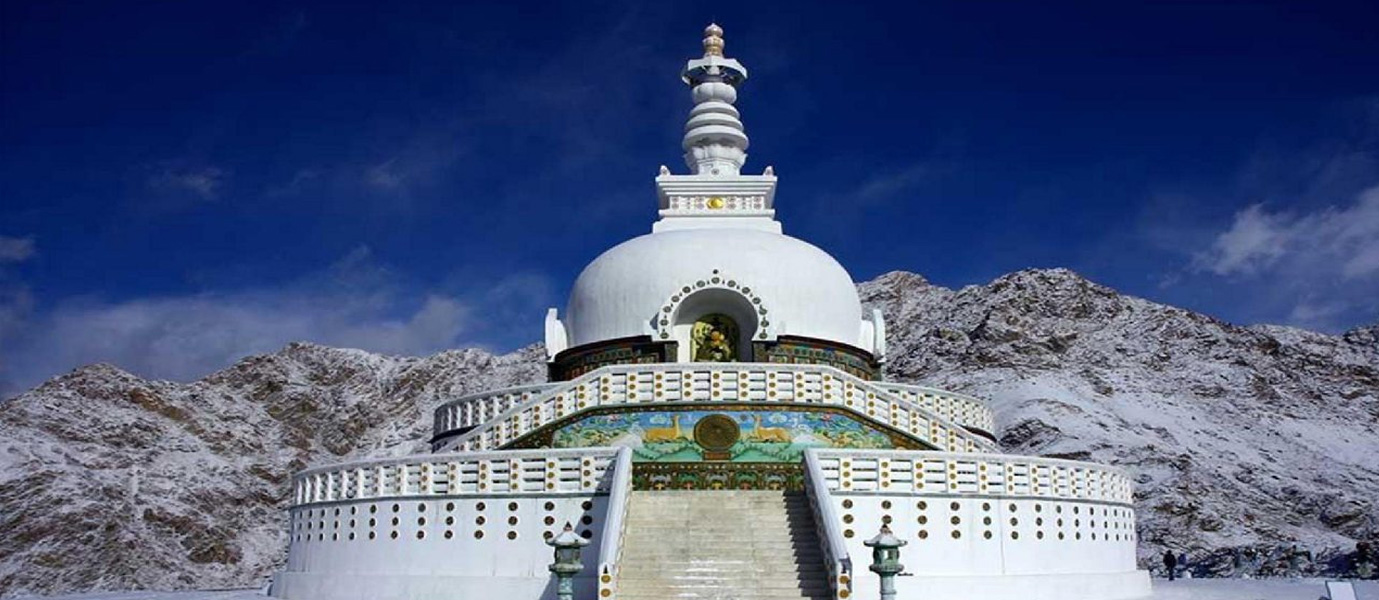
Begin with a visit to Shanti Stupa, perched on a hilltop overlooking Leh. Built by Japanese Buddhist monks to promote world peace, this white-domed structure offers sweeping panoramic views of the Indus Valley and snow-capped peaks surrounding the town. The silence here, combined with thin mountain air and vast horizons, creates a deeply calming atmosphere.
Proceed to the historic Leh Palace, constructed in the 17th century by King SenggeNamgyal. Built in Tibetan architectural style, the nine-storey palace once housed Ladakh’s royal family. From its terraces, you get uninterrupted views of Leh’s old town, narrow alleys and distant monasteries.
In the evening, stroll through Leh Market, a lively hub where traditional Ladakhi life meets modern tourism. Browse shops selling pashmina shawls, Tibetan handicrafts, prayer flags and silver jewelry. Small cafés serve butter tea, momos and Thukpa (local noodle soup). The market is also ideal for observing daily life and interacting with locals.
Overnight stay in Leh.
Today you cross one of the most celebrated mountain passes in the world — Khardung La (18,380 ft).
After early breakfast, begin your ascent. The road climbs steadily with sharp turns and changing mountain textures. As altitude increases, vegetation disappears and snow patches appear even in summer months.
At the summit, prayer flags flutter violently in icy winds. The signboard marking Khardung La as one of the world’s highest motorable roads makes for an iconic photograph.
Descending from the pass, the terrain shifts dramatically. You enter the wide river valley of Nubra, where stark mountains meet surprisingly fertile pockets of greenery along the Shyok River.
Reach Hunder Village, famous for its cold desert sand dunes — a surprising contrast within a high-altitude Himalayan setting. Here you can enjoy a ride on the rare double-humped Bactrian camels, historically used along the ancient Silk Route.
As sunset approaches, the dunes glow golden against a backdrop of snow peaks — one of Ladakh’s most unique landscapes.
Overnight stay in Nubra Valley (camp or hotel).
After breakfast, embark on a full-day excursion to Turtuk Village, located near the India–Pakistan border.
The drive itself is scenic and remote, following the Shyok River through rugged mountain terrain. Unlike other Ladakhi villages, Turtuk has a distinctly different identity — culturally and linguistically.
Until 1971, Turtuk was part of Pakistan. Today it remains one of the northernmost villages in India. The people here follow Islam and speak Balti, a language influenced by Tibetan and Central Asian dialects.
Walk through apricot orchards, narrow stone pathways and traditional wooden homes. The village feels untouched and authentic. Interaction with locals provides insight into a lifestyle shaped by isolation and border geopolitics.
The blend of Ladakhi landscape and Balti culture makes Turtuk one of the most fascinating stops in the region.
Return to Hunder by evening. Overnight stay in Nubra Valley.
Early morning visit to Diskit Monastery, the largest monastery in Nubra Valley. The giant Maitreya Buddha statue overlooks the valley, symbolizing peace and protection. From here, the views stretch across sand dunes and riverbeds below.
After breakfast, begin the drive toward Pangong Lake via the scenic Shayok route. This road follows the Shyok River and passes through isolated settlements and dramatic rock formations.
The journey is raw and less commercialized compared to other routes. The terrain feels vast and untouched.
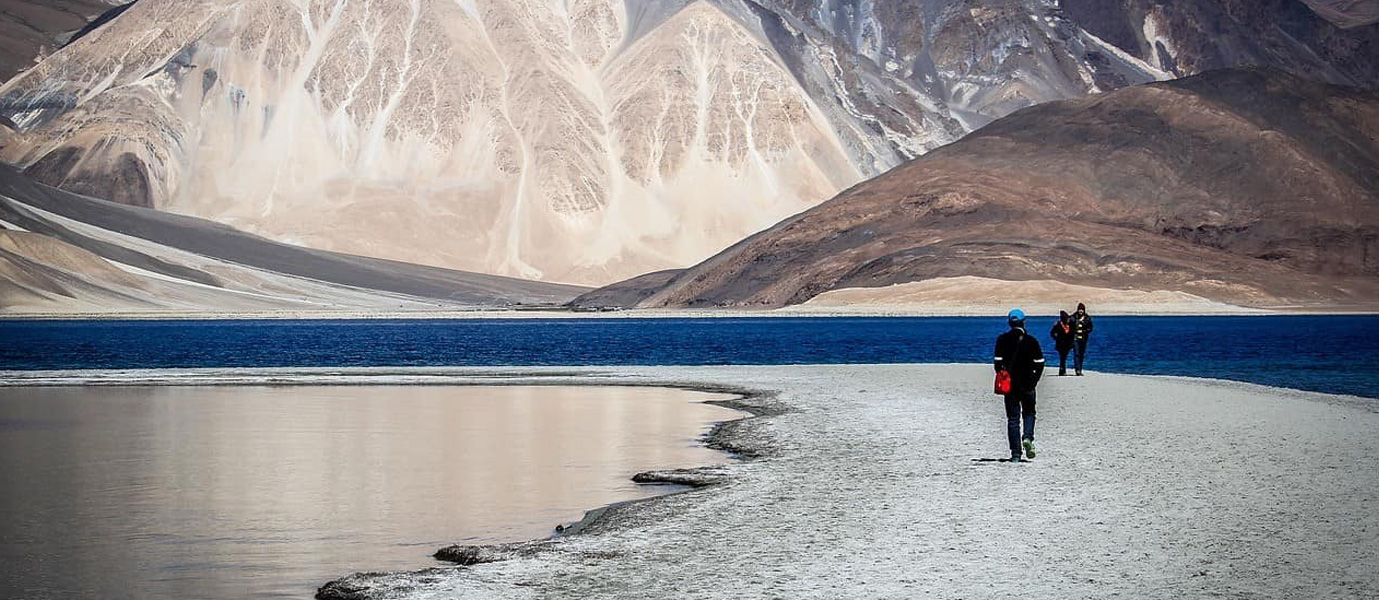
Upon arrival at Pangong Lake (4,350 meters), the first sight of its turquoise waters is unforgettable. The lake changes shades — deep blue, teal and silver — depending on sunlight and wind conditions.
Surrounded by rugged mountains and silence, Pangong offers one of the most serene high-altitude settings in the Himalayas.
Overnight stay at lakeside camp.
Wake up early to witness the sunrise over Pangong Lake. The still water reflects surrounding peaks in soft golden light — a photographer’s dream.
After breakfast, begin your return journey to Leh via Chang La Pass (17,590 ft). The road ascends steadily with snow-lined ridges and high-altitude terrain.
En route, visit Shey Palace, once the summer capital of Ladakh. The palace houses a large copper-gilded Buddha statue.
Continue to Thiksey Monastery, one of Ladakh’s most architecturally impressive monasteries. Often compared to Tibet’s Potala Palace, Thiksey features multi-level structures cascading down a hillside.
Arrive in Leh by evening. Overnight stay in hotel.
Transfer to Leh Airport after breakfast for onward flight.
 Inclusions & Exclusions
Important Notes
Inclusions & Exclusions
Important Notes
Share your details and receive a personalized India travel itinerary with handpicked hotels and private driver services.